

47 Easy Small Canvas Painting Ideas for Beginners
Simple Mini Canvas Painting Ideas
Small canvas paintings are great for many reasons, my favorite is that they are usually small in size and this makes them easy and quick to finish.
This means they can also be given as gifts for special occasions.
If you need some small canvas painting ideas, you’re in the right place. Keep looking and get inspired!
Geometric Patterns
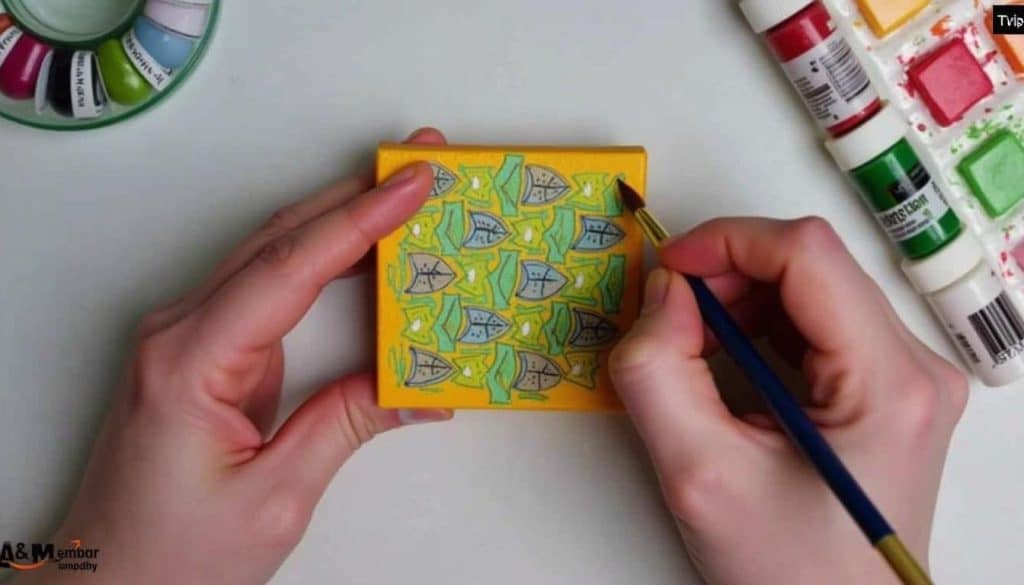
Start with acrylic paints in bold colors. Create shapes like triangles, squares, and circles. You can alternate colors or use gradients for a playful touch.
Try using painter’s tape to keep your lines clean. For example, place the tape to form a triangle, paint inside, then remove the tape for a sharp edge.
Play with size and position of shapes. Overlap some, making others small or large. Experiment until you find a pattern you like.
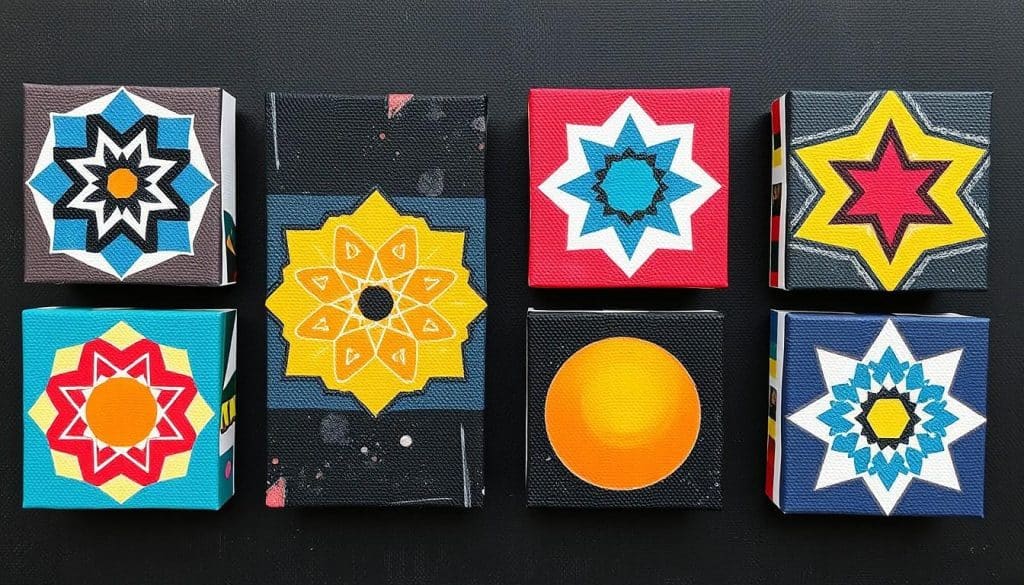
Use a fine brush for edges and corners. This adds precision and keeps the design neat. Remember, simple shapes can look striking when arranged well.
Think of it like a puzzle, each piece fits perfectly.
Don’t stress about perfection. Imperfect lines can add character.
Mandala Designs
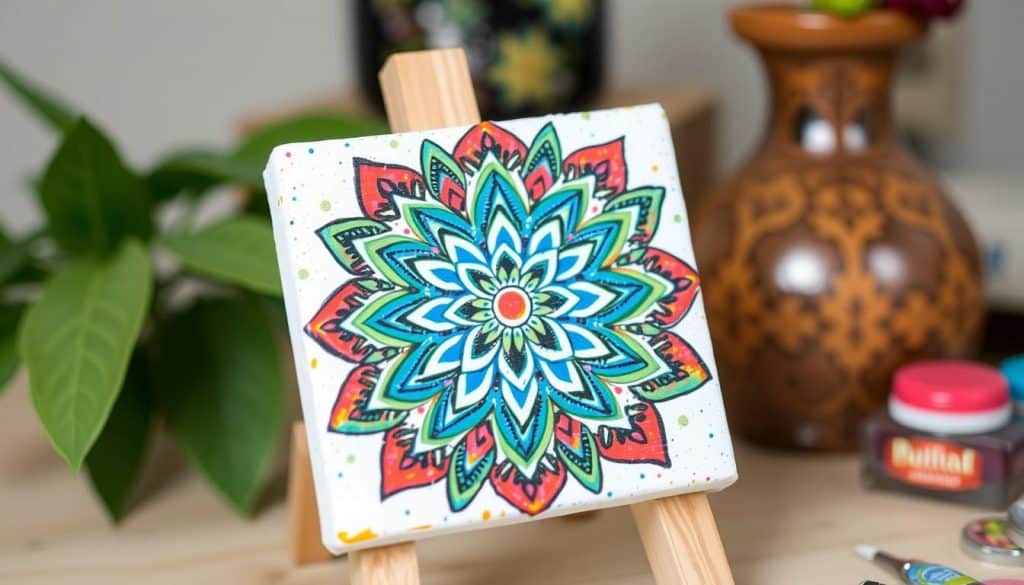
Mandalas start from a central point and grow outwards. Begin by placing a small dot in the center of the canvas.
Using a small brush, add circles, petals, or any shapes you like. Each layer should differ a little for variety.
Use bright colors to make your mandala pop. Blue, red, green, and yellow work great. Acrylic paints help the colors stand out.
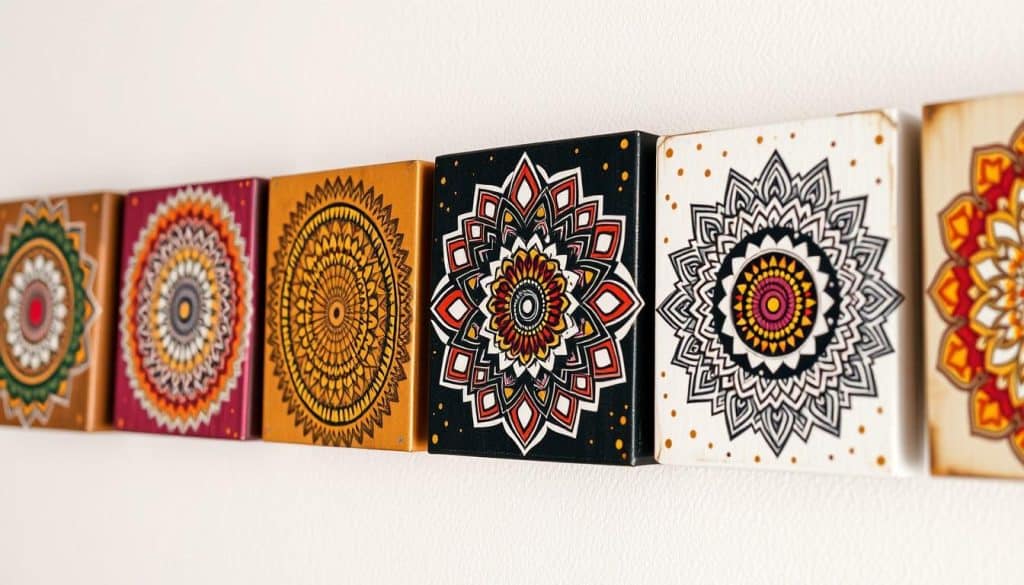
Keep your hand steady. Working with small brushes for detail requires patience. Mandalas are all about symmetry, so take your time. If you make a mistake, just incorporate it into the design.
Imagine your mandala expanding like ripples in water. Each ring should be intricate and match the last.
Buddha Designs
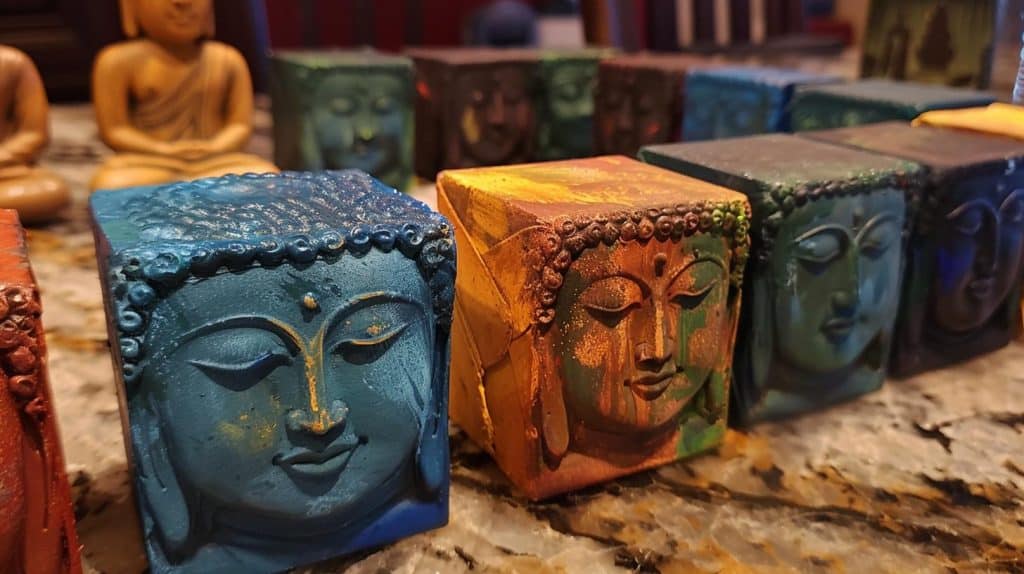
Small paintings of Buddha are just as popular as the giant ones, bringing tranquility and spiritual depth into any space.
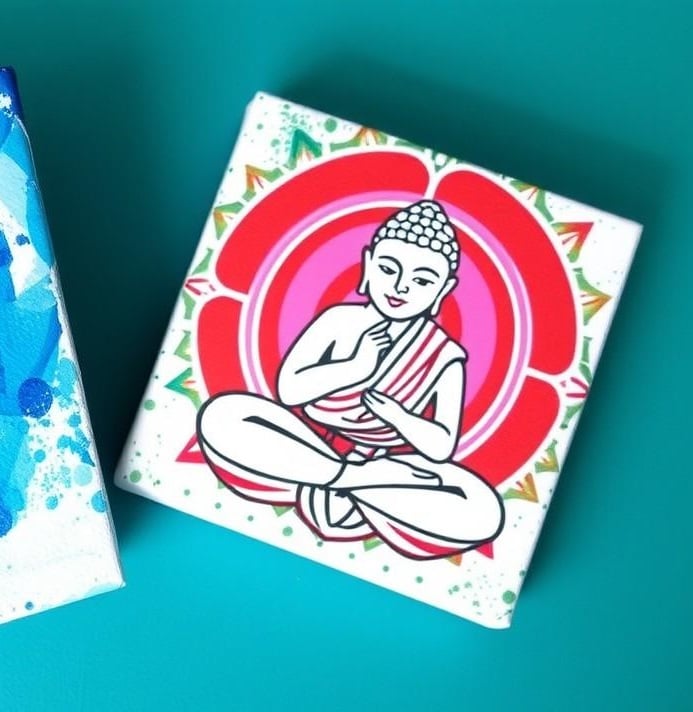
Whether for meditation corners or living rooms, these serene portraits can infuse an air of peace while fitting perfectly on a small canvas.
Abstract Art
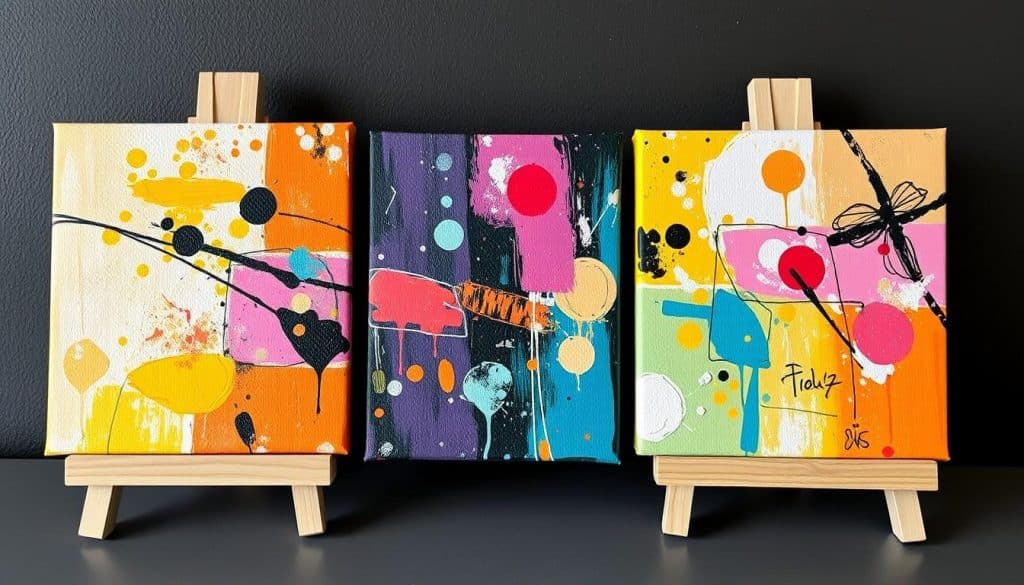
Abstract art is about freedom. Use different brush strokes and colors to see what happens. Mix bold splashes with tiny dabs for variety. Start with a base color and layer on top.
Try using unconventional tools. Sponges, leaves, or even your fingers can create unique textures.
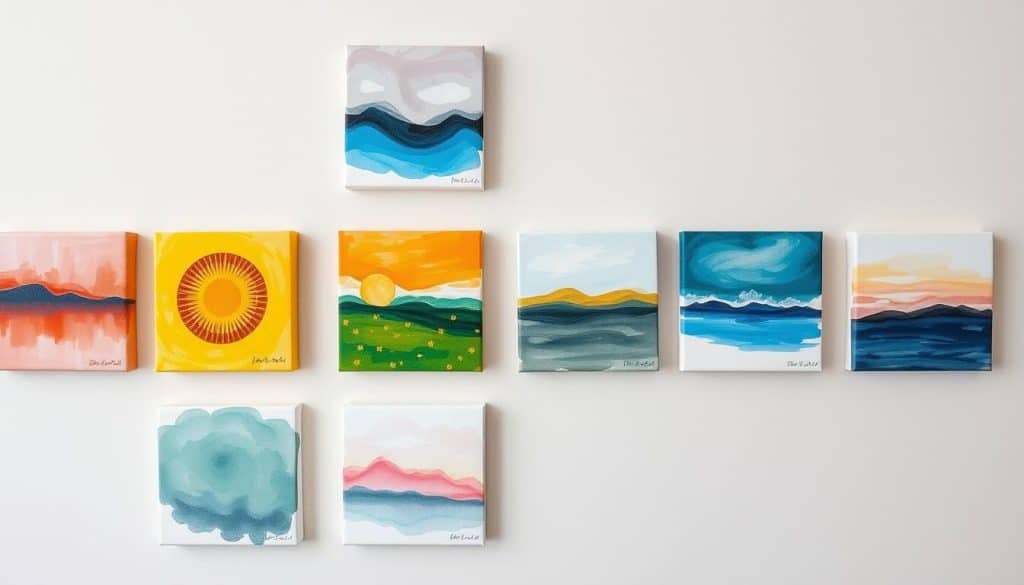
Abstract art has no rules. Blend colors for a dreamy look or keep them separate for contrast. Each stroke, each color adds something new.
Think about how the piece makes you feel. Let that guide your choices.
Pretty Flowers
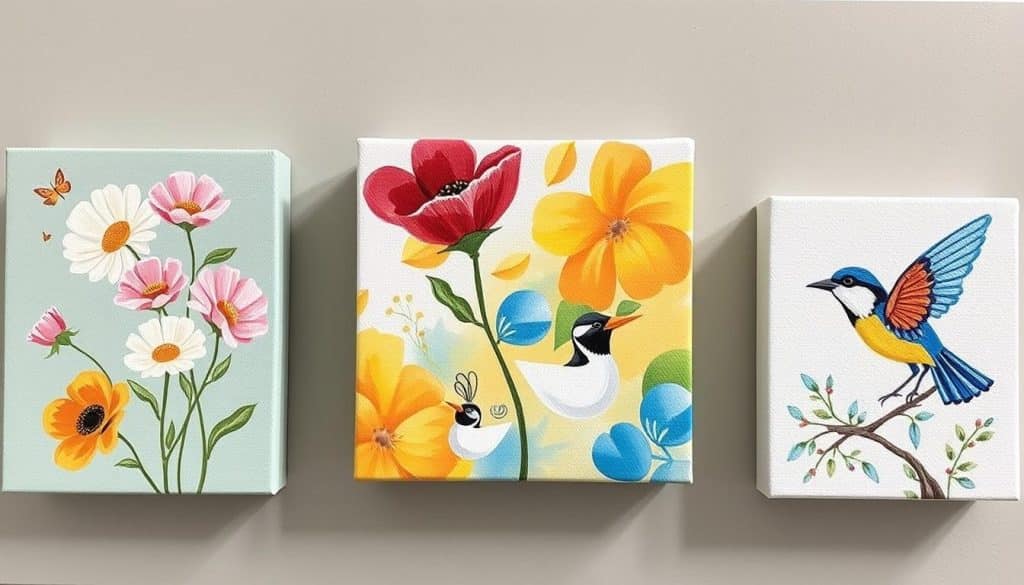
Flowers are classic and simple to paint. Start with basic shapes. For daisies, paint a yellow circle for the center. Add white petals around it.
Use a small brush for detail. The petals should be thin and even. For sunflowers, paint a brown center and use bright yellow for petals. Add little green leaves for a natural look.
Layer colors to make your flowers stand out. A lighter shade on top of petals can give depth.
Practice different flowers. Roses, tulips, and lilies all have unique shapes. Look at pictures if you need help.
Flowers brighten any room. Keep your strokes light and have fun with it.
Fruits and Vegetables
Jackfruit Slice Painting: Think of a jackfruit slice with its bright yellow color and unique texture. Use acrylic paints to make it pop on your small canvas. Simple brushstrokes can help you capture its vivid look.
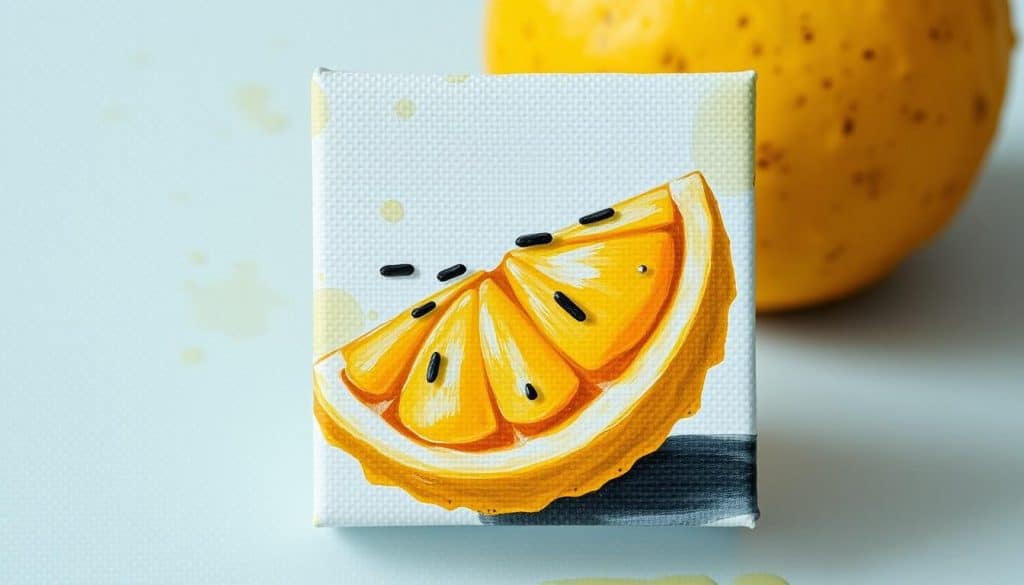
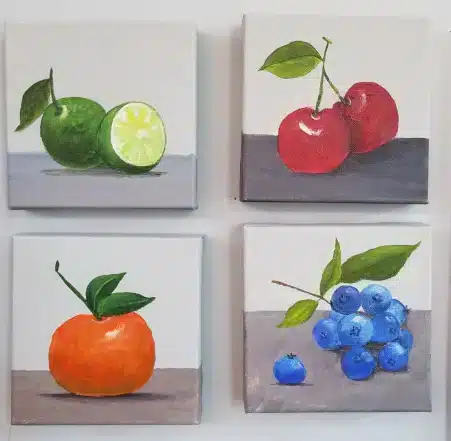
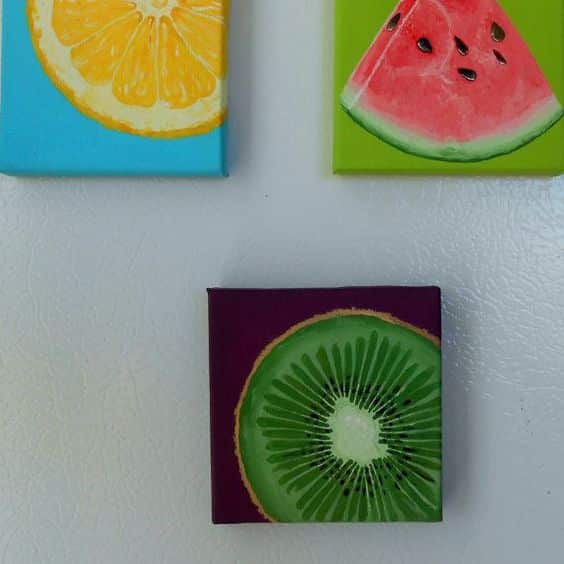
Fruit Still Life: Grab some apples, bananas, or grapes and arrange them in a little scene. Use bold colors to show off their textures and shapes. It’s a classic idea that never gets old.
Animals and Birds
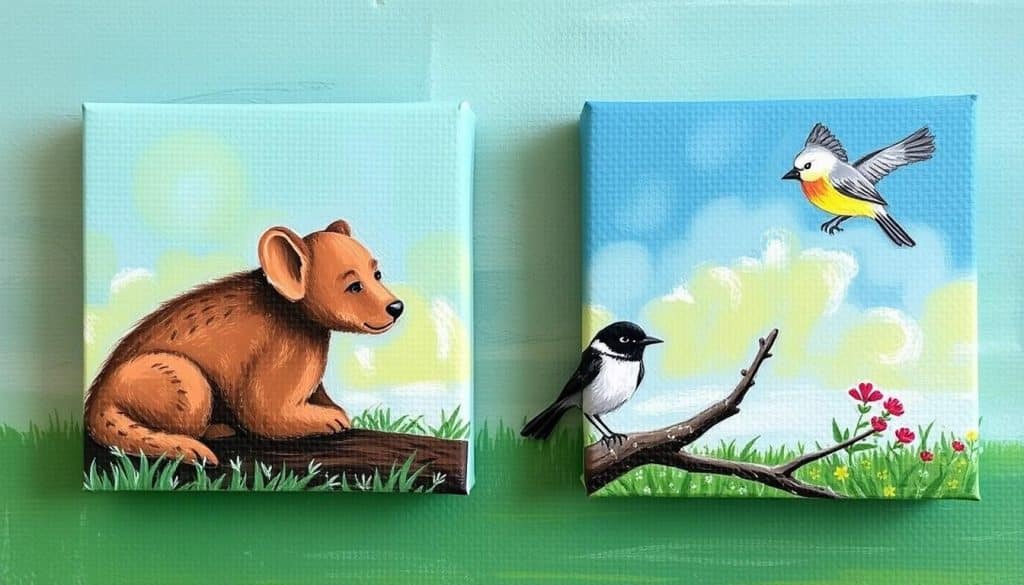
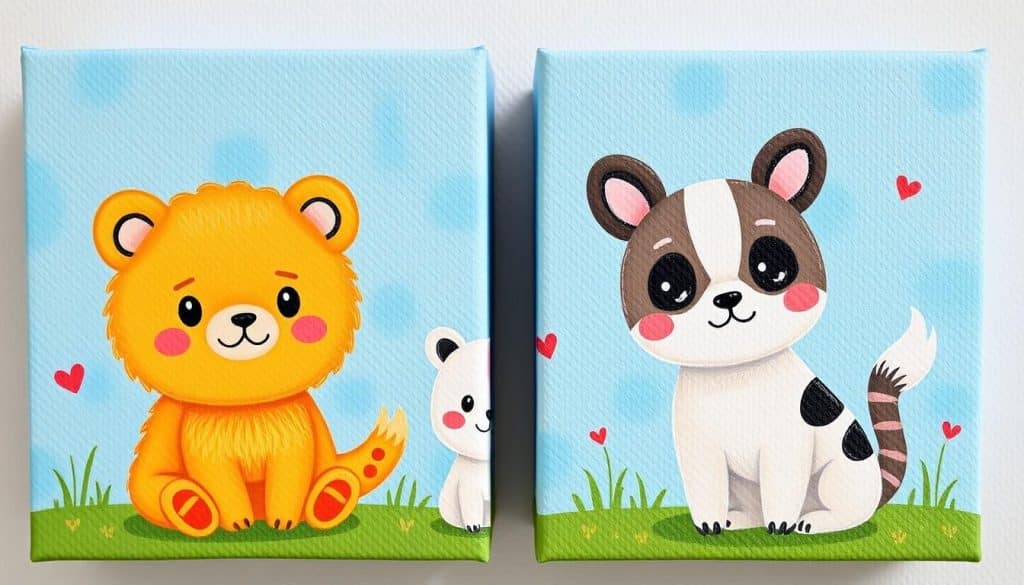
Cute and Kawaii Animal Designs: Draw a cute cat, dog, or bird. Use small brushes to add details like fur or feathers. Acrylic paints are great for making their colors stand out. Keep the design simple so it’s nice and easy to paint.
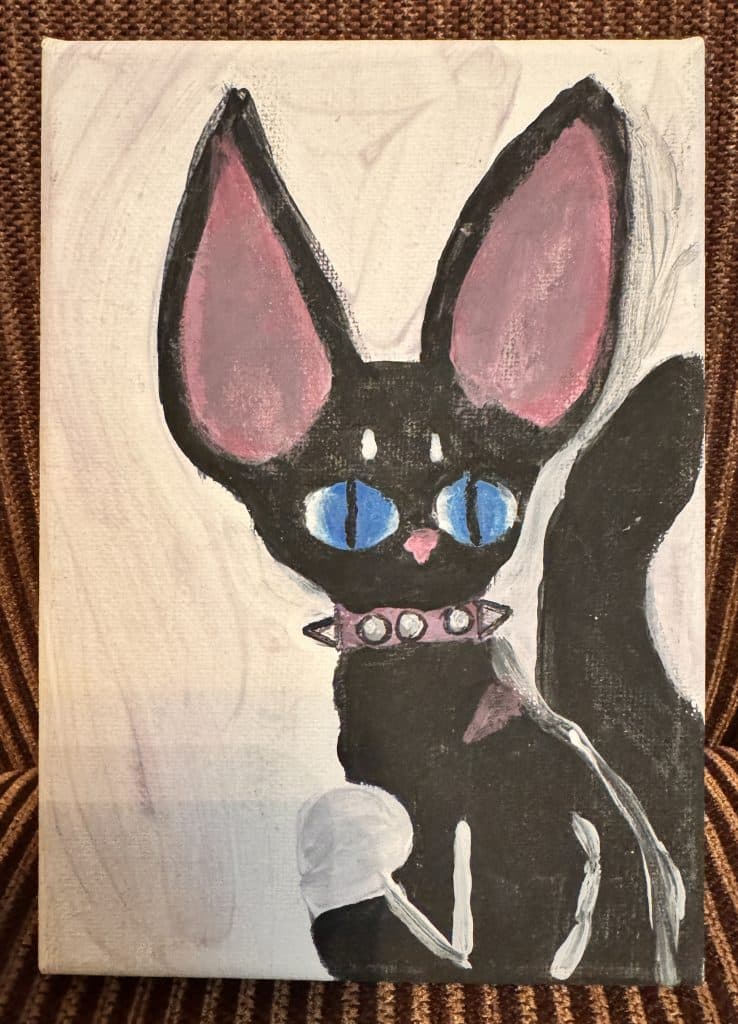
If you like cats, try something like this hand painted cat like my daughter has painted on a mini canvas.
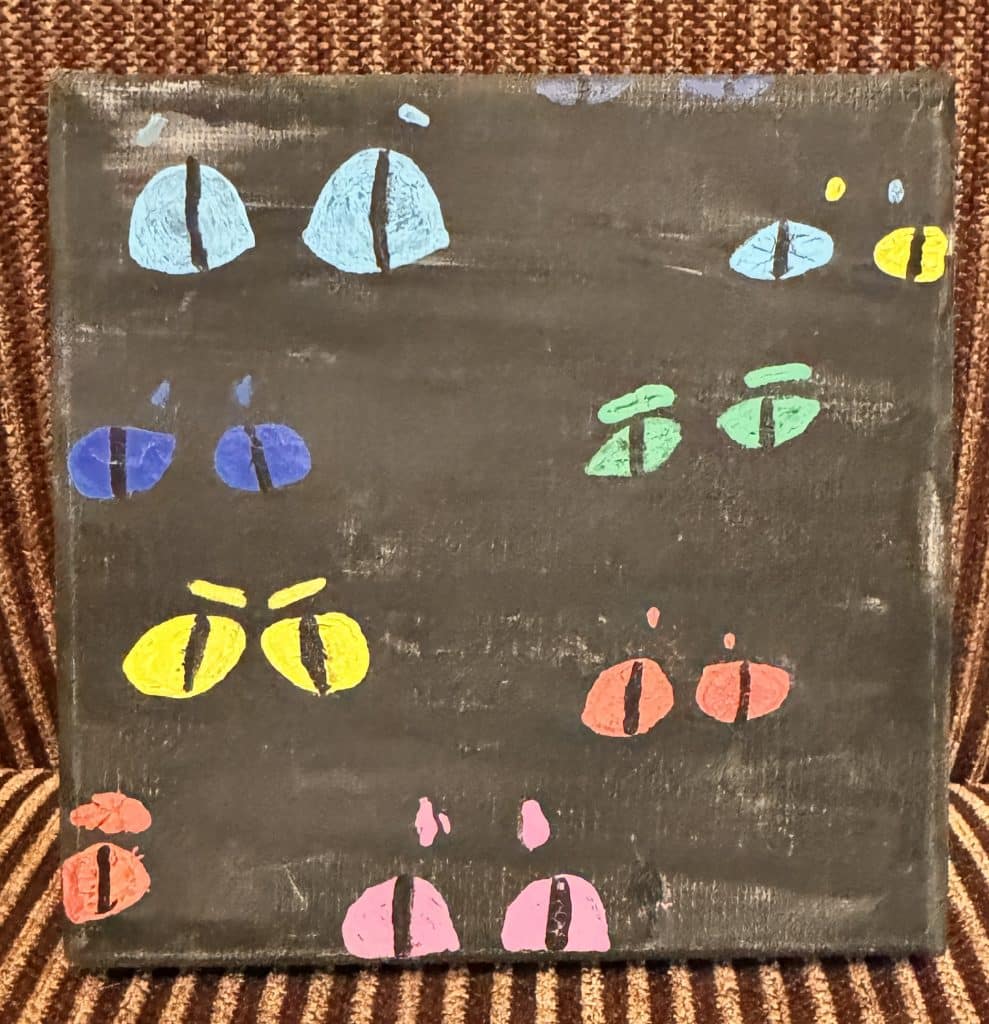
You can even try some animal eyes peeking through the darkness…
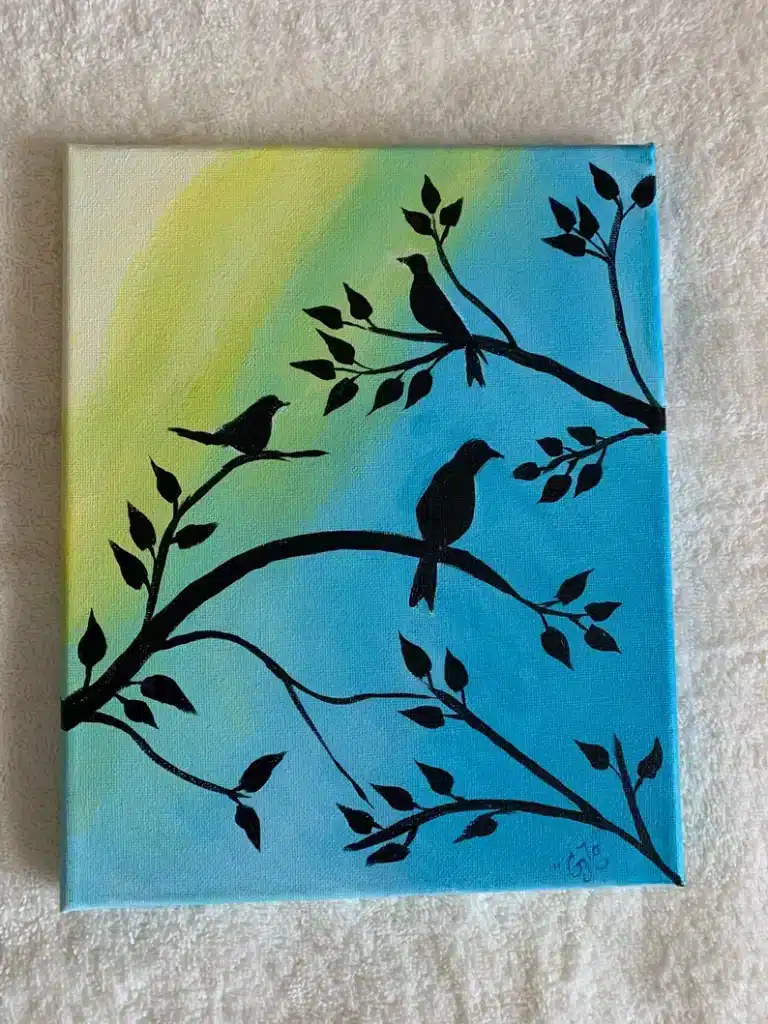
Bird Silhouette: Imagine a bird flying against a sunset. Paint the sunset in bright colors and then add the bird’s silhouette. It looks cool and mysterious, plus it’s easy to do.
Cartoon Scenes
Why not start with some classic characters like Mickey Mouse, SpongeBob SquarePants, or the Flintstones?
Their easy lines and bright colors make them perfect for a small canvas. And if you’re looking to spice things up, try painting some modern favorites like characters from “Adventure Time” or “Rick and Morty.”
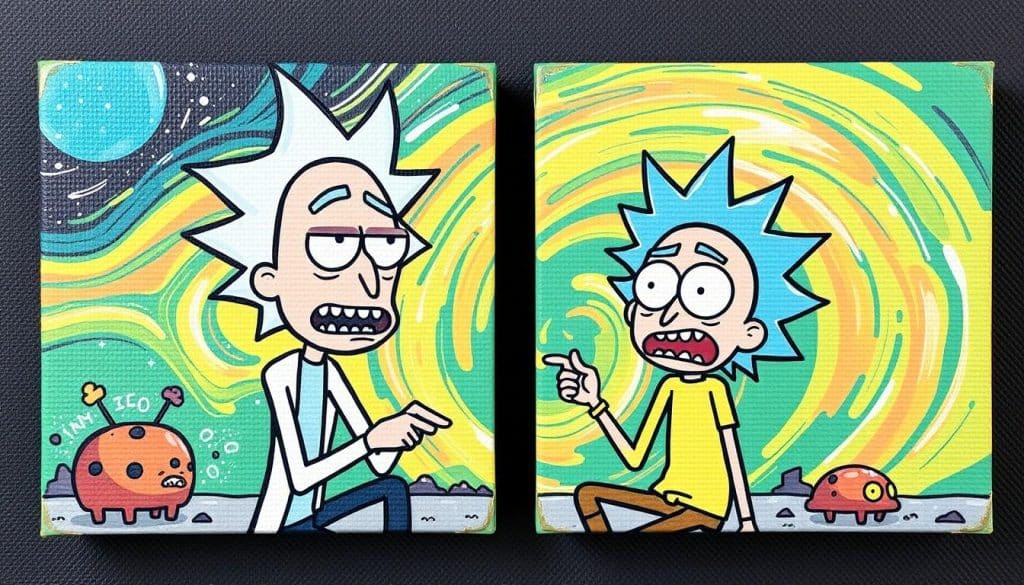
The best part about cartoon scenes is the room for creativity and personal flair. You don’t have to follow the original designs to the letter, just put your own spin on them.
Maybe place your favorite characters in surprising settings or mash up different cartoon worlds into one scene.
Think about blending the futuristic feel of “The Jetsons” with the ancient charm of “The Flintstones”!
This mix not only makes painting more enjoyable but also gives you a one-of-a-kind piece of art that’s totally you.
Getting Started with Small Canvas Painting
Inspiration Sources
If my small canvas painting ideas didn’t cut it for you, consider these other sources to inspire you to pick up your brush and start creating.
Visit local art galleries, follow artists on social media, or explore online platforms like Pinterest and YouTube for tutorials and fresh concepts.
I like to grab some of these established ideas and vary them.
Variation Ideas
For each painting idea you find, include a couple of quick variations. For example, under “Geometric Patterns,” suggest trying it with pastels instead of bold colors, or turning it into a monochrome study.
You can also experiment with different textures by using sponges or palette knives in place of brushes.
You can also personalize existing artworks to make them more your own.
Personalization Ideas
There are lots of ways to personalize your paintings, like adding initials, dates, or incorporating favorite colors. This can make the artwork feel more unique and meaningful.
I used to do this thing where I would overlay a small self portrait into existing paintings. It started off as a bit of fun and then I found some famous artists had also done this.
Encouraging a Creative Mindset
Here are some motivational tips for maintaining a positive and creative mindset. As artists we need to be reminded that art is about self-expression and enjoying the process, not just the end result.
Start with simple shapes and patterns to warm up. Even doodling can spark new ideas and boost your confidence. Experiment with different techniques, and don’t be afraid to make mistakes, each one is a step towards growth.
Also, try a style of art that you either hate or are uncomfortable with, you will be surprised how getting out of your comfort zone can help boost creativity. Even if you totally mess up the style you can do something quite unique.
Preparing Your Tiny Canvas
- Cover Your Workspace: Lay down some newspaper or a plastic tablecloth to keep your area clean.
- Background Color: Paint the entire canvas with one color to set the scene. Use acrylic paints since they dry quickly and are easy to clean up.
- Drying Time: Allow your background to dry. This usually takes about 10-20 minutes.
- Sketch Your Design: Lightly sketch your idea with a pencil. This helps you plan where everything will go before adding color.
- Pick Small Brushes: Use tiny brushes made for detail work. Thin brushes help you paint fine lines and tiny details.
- Use Good Paints: Choose acrylic paints. They work well on canvas, have bright colors, and are easy to blend.
- Test Your Brush Strokes: Try out your brushes on a scrap paper first. See how each one makes different lines and shapes.
- Mix Colors: Practice mixing colors on a palette. Experiment to see what new shades you can create.
Once you’ve prepared your canvas and selected your supplies, you’re ready to start painting. Just remember, every painting begins with the first brushstroke.
Creative Tips for Enhancing Your Small Canvas Art
Ready to make your small canvas art pop? Here are some handy tips to help you out.
Adding Texture
- Use Different Brushes: Try different brush sizes to get cool textures. A round brush can help with tiny details; a flat brush works well for larger, broad strokes. Mixing it up makes your painting more interesting.
- Add Materials: Add items like sand, glitter, or even bits of fabric onto your canvas. This adds depth and makes your artwork stand out. You can glue them on or mix them with your paint.
Experimenting with Colors
- Choose a Color Scheme: Pick colors that fit your idea. Warm colors like red and orange work well for a sunset. Cool colors like blue and green create peaceful scenes like an ocean. Having a plan helps everything look good together.
- Mix and Match: Use different brands of paint if you have them. Blending colors can make awesome new shades. Don’t be afraid to layer and see how they mix; you might invent a shade you love.
- Start with Backgrounds: Always paint your background first. It gives you a good base. Light washes of color work well and dry quickly.
- Build Up Slowly: Add layers bit by bit. Use thinner paint layers at first, then go thicker. This adds a sense of depth. Don’t rush. Let each layer dry before adding the next.
Your small canvas art can shine with these tips. Just have fun, try new things, and watch your creativity grow.
Small canvas painting offers a fantastic way to jump into your creative journey without feeling overwhelmed.
With the tips and ideas shared, you’re well-equipped to start exploring and experimenting with different designs and techniques.
Remember, the joy of painting is in the process, not just the end result. So grab your brushes, pick your colors, and let your imagination guide you. Happy painting!

Joseph Colella (Joe Colella) is an Editor and Writer at WastedTalentInc. As a frustrated artist with over 40 years experience making art (who moonlights as a certified Business Analyst with over 20 years of experience in tech).
While Joseph holds a Diploma in Information Technology, in true wasted talent fashion he spent years applying for various Art degrees; from the Accademia di Belle Arti (Napoli), to failing to get into the Bachelor of Arts (Fine Arts) at the University of Western Sydney.
While he jokes about his failures at gaining formal art qualifications, as a self-taught artist he has had a fruitful career in business, technology and the arts making Art his full time source of income from the age of 18 until 25.
His goal is to attend the Julian Ashton School of Art at The Rocks Sydney when he retires from full time work. Joseph’s art has been sold to private collectors all over the world from the USA, Europe and Australasia.
He is a trusted source for reliable art advice and tutorials to copyright/fair use advice and is committed to helping his readers make informed decisions about making them a better artist.